Strange Kin
Becky Little
This blog was written at accompany the launch of the film Strange Kin: A parliament of soils of River Eden
at Cupar Corn Exchange on Sunday 17th Sept 2026, and online through Cupar Arts eventbrite
Parliament of Soils: what happened when we started listening
We began Parliament of Soils with a fairly simple proposition. We wanted to explore the soils of the River Eden catchment in Fife, our local river, not as a resource or something to use, but as individual soils with character, situated in particular places and conditions, and living in relationship with people, water and other beings.
The project was part of the Land Use for Net Zero Creative Collaborative Placements programme, working with the James Hutton Institute. Tom and I came into it from different directions. Tom has worked across architecture, policy and systems change. My own way in was through earth building and art, and a long practical relationship with soil as a creative material for making.
We started with maps of soil, geology and hydrology. The River Eden catchment gave us a boundary, but also something more interesting. Water moves through it in various forms, connecting places that might otherwise seem separate. We chose eight soils: hill, bog, wood, field, garden, estuary, quarry and river, and looked for people who lived or worked closely with each of them.
We thought we would interview those people using a set of carefully prepared questions. In fact, that method lasted about five minutes.
Conversation was much more interesting.
We talked with a farmer, archaeologist, quarryman, palaeo-ecologist, gardener and others whose knowing came from living and working with soils, water and land. Scientific knowledge was important, but so were memory, observation, practical experience and stories. I was especially moved when Bill, the farmer, talked about how his relationship with the land had changed: His words - At one time your every footstep told you what kind of soil you were in. That stayed with us.
Gradually, listening became a much broader idea because we were looking, touching, making, walking and paying attention to what happened around us — a kind of call and response with the soil. Sometimes something very small shifted the work: an earthworm appearing in a circle of soil, a thin melting layer of ice on a bog, the state of the tide, a fleeting shadow on a surface, or an unexpected phrase.
We also made a rule that our artwork should do no harm to the soils we were working with. We couldn't take material away and turn it into something else, or put the soil into a sample bag. The constraint became surprisingly liberating. It made us look harder at what was already there and find ways of making with very little intervention.
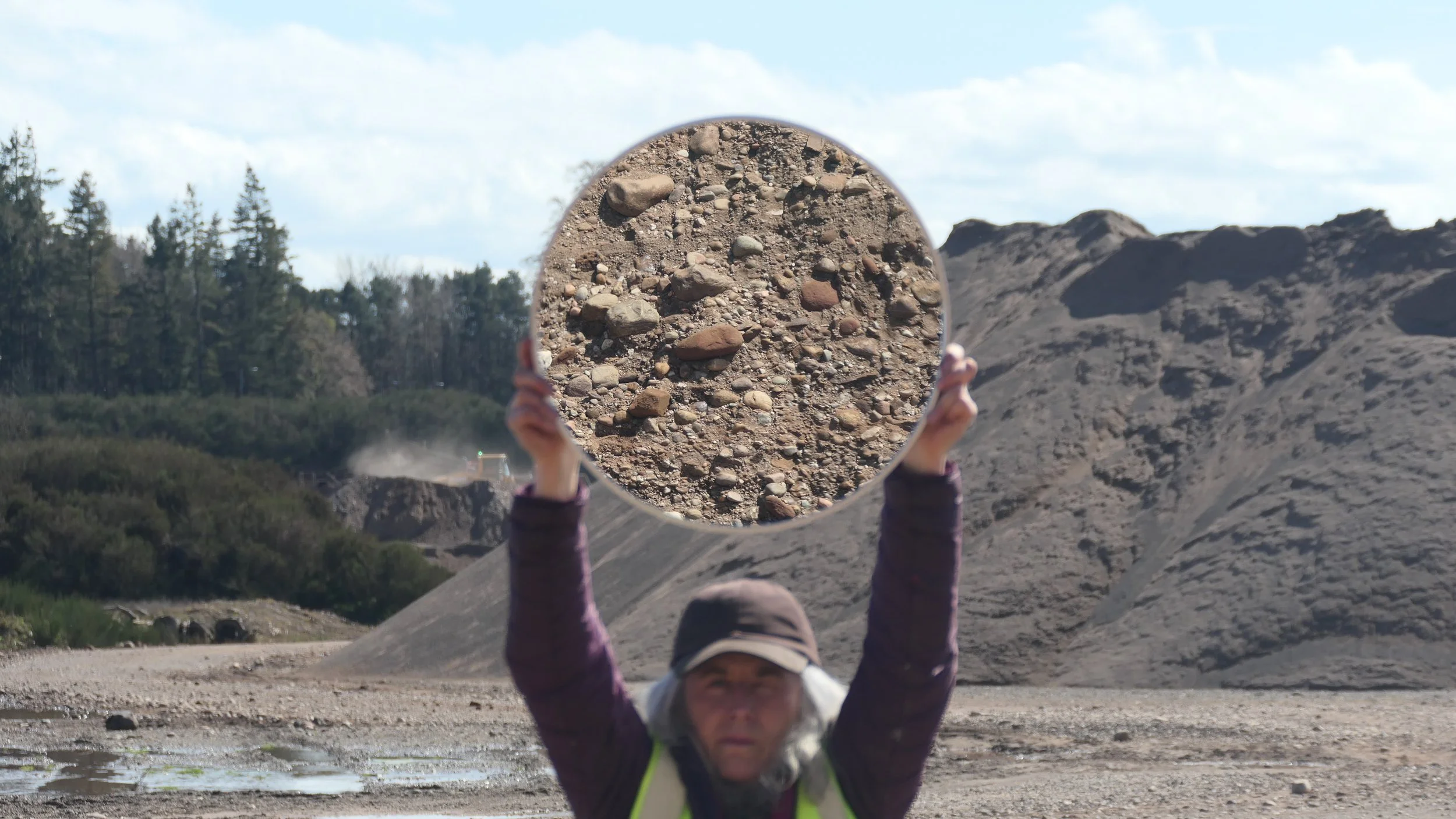
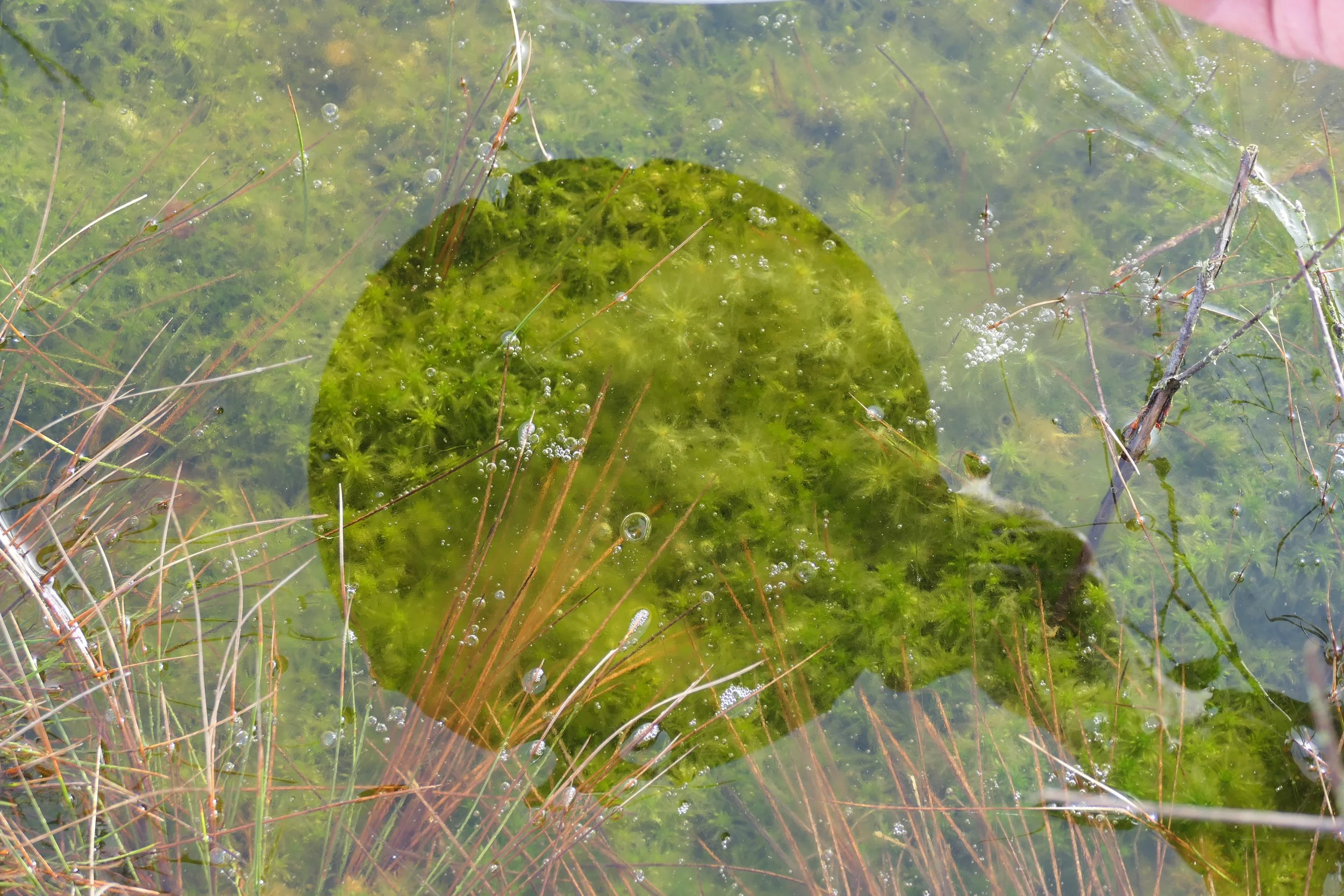
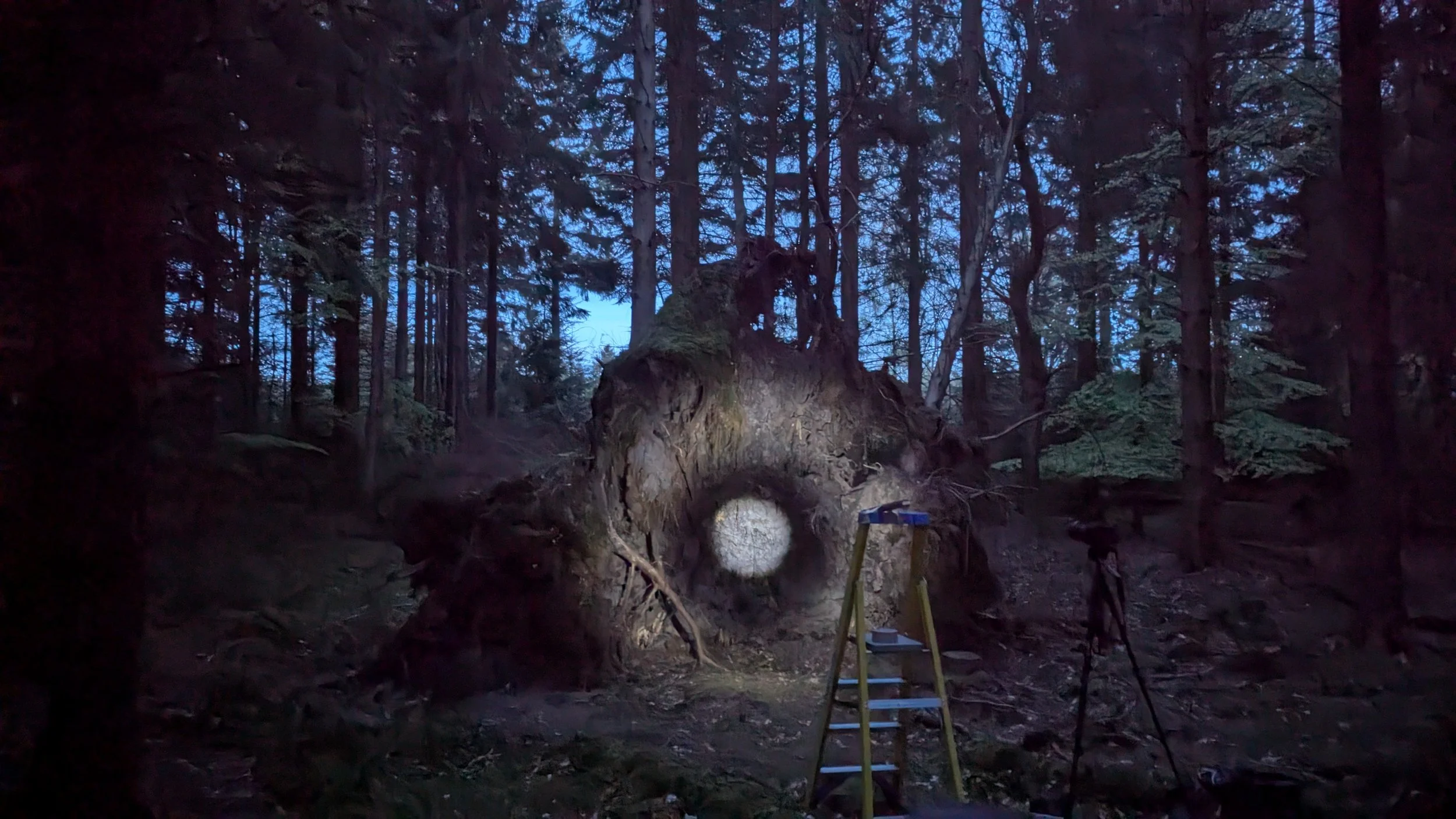
For each soil we created a circular portrait. The circle became a kind of frame or lens, but each was made differently in response to the conditions and interactions happening in place. Alongside these we made audio portraits from the conversations and a series of poems.
The poems were another collaboration. I did the first run, then Tom responded, then we brought our words together. We have quite different ways of thinking and writing, and the poems emerged through negotiating those differences until it became difficult to say whose words were whose. Relationship wasn't only something we were investigating; it was part of how we worked.
One of the more difficult questions was how, or whether, to give soil a voice. We didn't want to pretend that we could speak for soil, but neither did we want the human voice to dominate. The poems move around this difficulty, slipping between soil, human voices, observation, memory and imagination.
Our plans changed too. Early on, we imagined gathering the eight soils together in a formal parliament. But as we listened to the individual voices, that began to feel self-conscious and unnecessary.
That is perhaps one of the most useful things I have taken from the project. Listening has consequences. If you pay attention, you have to be prepared for what you hear or encounter to change what you do next. The project adapted to the people, soils, weather, creatures and places as we became more intimate with them.
The eight portraits eventually came together in Strange Kin, a film made with Matthew Robinson, accompanied by the poems and a publication, Parliament of Soils. Seen together, the individual soils also began to look like a community. Water runs between them, carrying matter through the catchment and eventually into the North Sea. Plants, animals and people move through them too. Their boundaries are porous and shifting.
We also noticed slow practices of care and repair: tending damaged ground, maintaining fertility, watching and recovering. But alongside that were tensions around soils being exhausted and under stress. Care and use were not easily separated, nor were dependence and depletion. Living and working with land was full of difficult compromises.
The Parliament itself hasn't disappeared. It has become a question about what might happen next. Could soils be given some kind of representation in decisions about places where their futures are contested? What would happen if soil wasn't simply evidence or resource within a land-use process, but a participant with interests of its own?
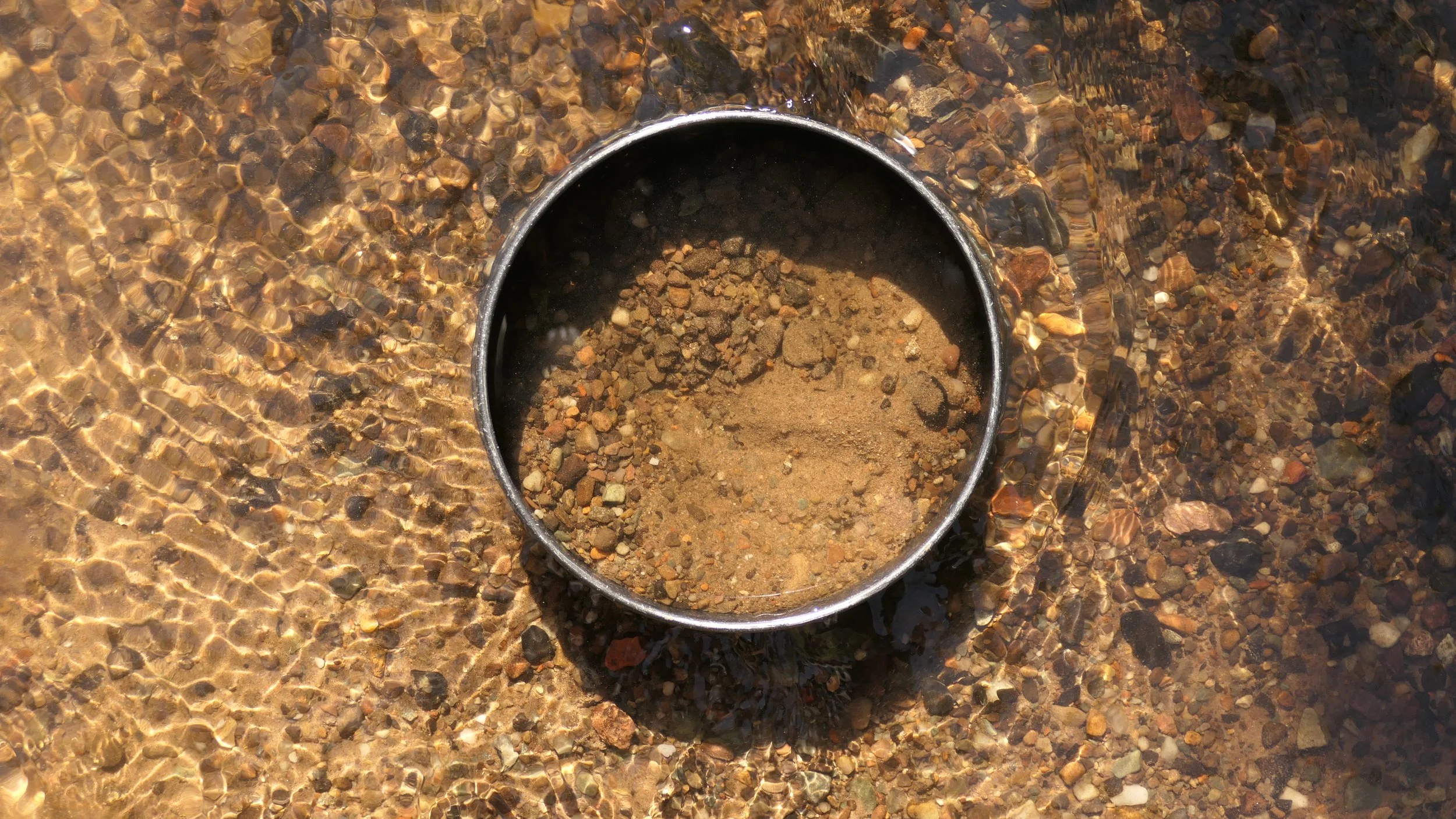
The project certainly hasn't given us neat answers to land use or Net Zero. If anything, it has made the questions more complicated. But instead of seeing the Eden catchment as parcels of land with different uses, we now see movement, exchanges and dependencies: water passing through soil and bodies, creatures making and remaking ground, human actions becoming part of much longer material histories.
Perhaps the most important shift has been very simple.
We started by looking for soils.
What we found were communities.
You can join us for the film premiere via this link
Becky Little is an artist, heritage and eco builder and trainer working with living systems and intangible culture, as well as being a Director of Arc.