
Flood Risk in Traditional Buildings
Oliver Goddard
Five wet weather months since I was invited to talk at the Scottish Lime Centre’s ‘Building Conservation Masterclass’ about flood risk and traditional buildings, I find myself reflecting on the past winter’s flood events and their impact on our built heritage.
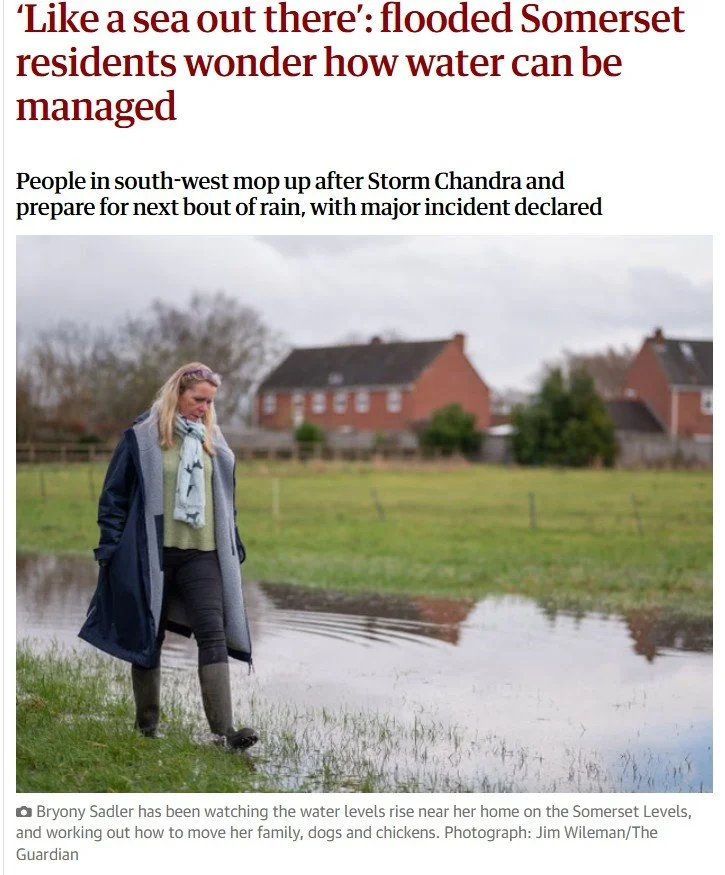
Across the U.K., from Aberdeenshire, to Monmouthshire, to the Somerset Levels, communities received back-to-back warnings of increased rainfall. What followed was repeated inundation within a matter of weeks. These were not rare, freak events; they were predictable outcomes of saturated catchments, intensifying rainfall, and built development patterns that remain misaligned with hydrological reality.
Across these events, several consistent patterns emerge.
Saturation at a Critical Threshold - Flooding was not simply a function of rainfall intensity. It was the result of landscapes already at capacity. Once soils are saturated, even moderate rainfall becomes high-risk, rapidly translating into surface runoff and river surges.
River Systems Exceeding Design Limits - Multiple locations recorded river levels at or beyond historic highs. This suggests that existing flood defence benchmarks often based on historical data are no longer reliable indicators of future risk.
Infrastructure Failures - Flooding exposed interdependencies; communities became isolated due to impassable roads and the shutdown of rail networks, while power and communications infrastructure were severed and drainage and sewer systems overwhelmed, causing systemic disruption.
Vulnerability of Lowland and Historic Settlements - Places like the Somerset Levels and river-adjacent towns experienced repeated inundation. Many of these hydrologically sensitive settlements are historic, with urban forms that predate modern flood risk understanding.
From these reoccurring trends, it is becoming increasingly clear that flood risk in the UK is no longer a series of geographically isolated weather events, but a systemic failure of landscapes, infrastructure, and the built environment inadequate to cope with the rapidly changing climate.
Hydrological Context of the UK’s Built Heritage
The UK’s historic built environment is intrinsically linked to its water systems. Settlement patterns were historically determined by proximity to rivers, estuaries and coastal routes, reflecting their functional importance for transport, industry and agriculture. Many Scottish settlements were located where rivers meet the sea, making them doubly vulnerable.
As a result, a significant proportion of traditional buildings stand on the frontline most susceptible to fluvial, pluvial and coastal flooding, made more vulnerable due to soil saturation and poor land management on higher ground.
HES (Historic Environment Scotland) has made considerable ground in conducting climate change impact risk assessments on the properties in their care. Whilst these national treasures of significant Scottish importance (Skara Brae Prehistoric Village, Incholm Abbey, Stanley Mills, Newark Castle, Kisimul Castle, Bonawe Iron Furnace to name a few) hold exceptional value in our built heritage, most stand isolated and uninhabited. In comparison, there is a lack of similar assessment and flood-ready investment in traditional villages, which face a larger disruption to the general Scottish population.
Climate Change and Increasing Flood Exposure
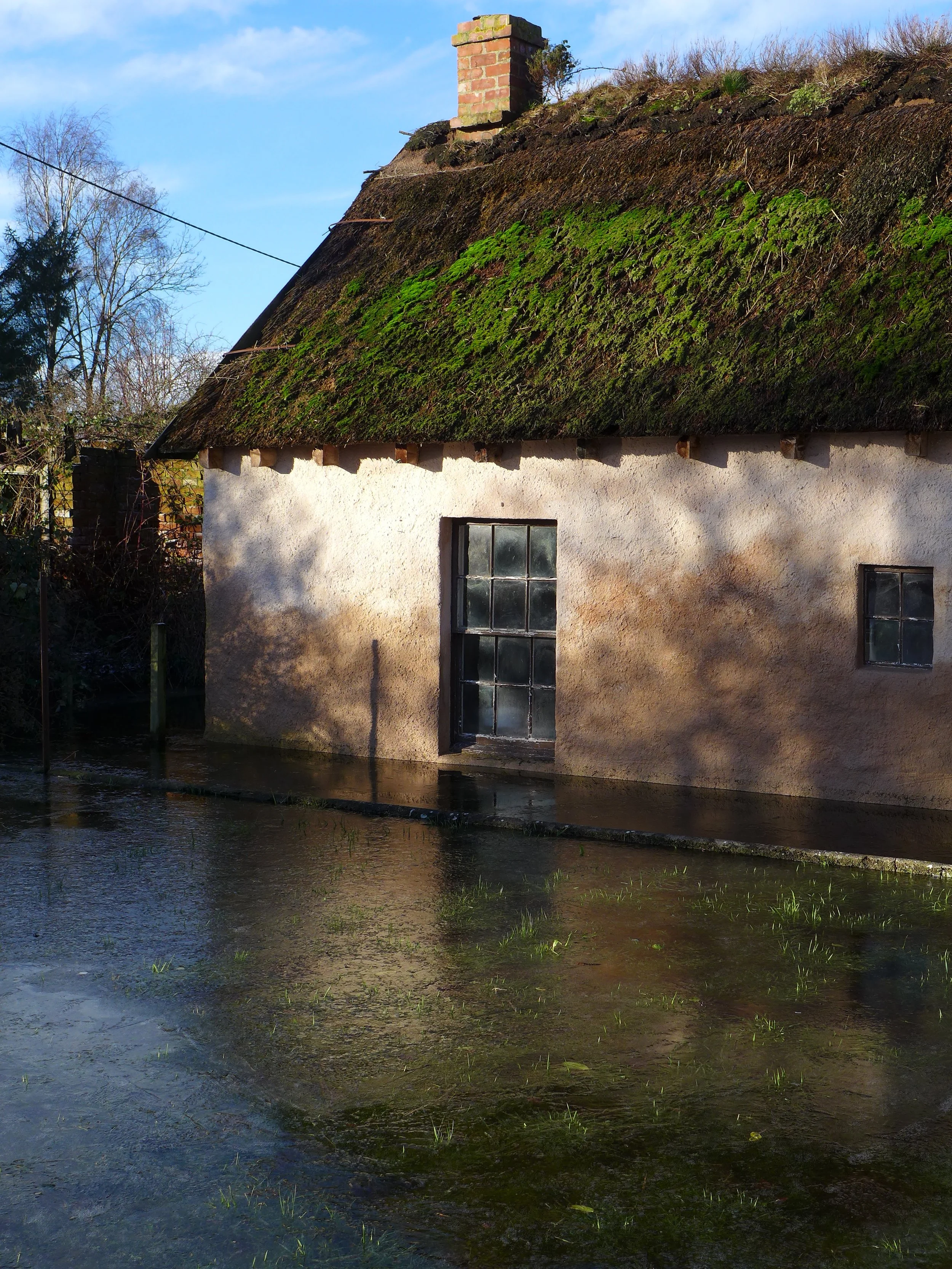
During my presentation at the Scottish Lime Centre, I divided the audience into four groups to emphasise the current estimate that approximately 25% of properties in Scotland are at risk of flooding, with traditional buildings particularly vulnerable due to their construction typologies, material behaviour, and location. The A-Listed Cottown School House is an exemplar example of traditional mudwall construction that is vulnerable to repeat flooding and ice jacking from saturation whilst the A-Listed Finzean Mill is regularly threatened from the ferocious velocity and rising of the Water of Feugh. These both emphasis where the true challenge lies, as traditional construction was not designed to accommodate the current trajectory of climate change. Increased rainfall intensity, prolonged saturation periods, and more frequent extreme weather events are contributing to elevated flood risk putting a quarter of the population at risk of the flooding disruption and infrastructure failure witnessed this winter.

Flood Ready
Providing climate resilient architecture has always been integral to my work but over the last three years, our projects at Arc Architects have increasingly focused on developing a ‘flood ready’ strategy to improve the flood resilience of traditional buildings with a structured and risk-informed approach to retrofit and adaptive-reuse. This ‘3R’ approach provides a useful hierarchy for intervention and challenges some of our typical design and material principles that have been embedded in our eco-philosophy for the last 20 years, forcing us to accept and respond appropriately to change.
Flood Resistance
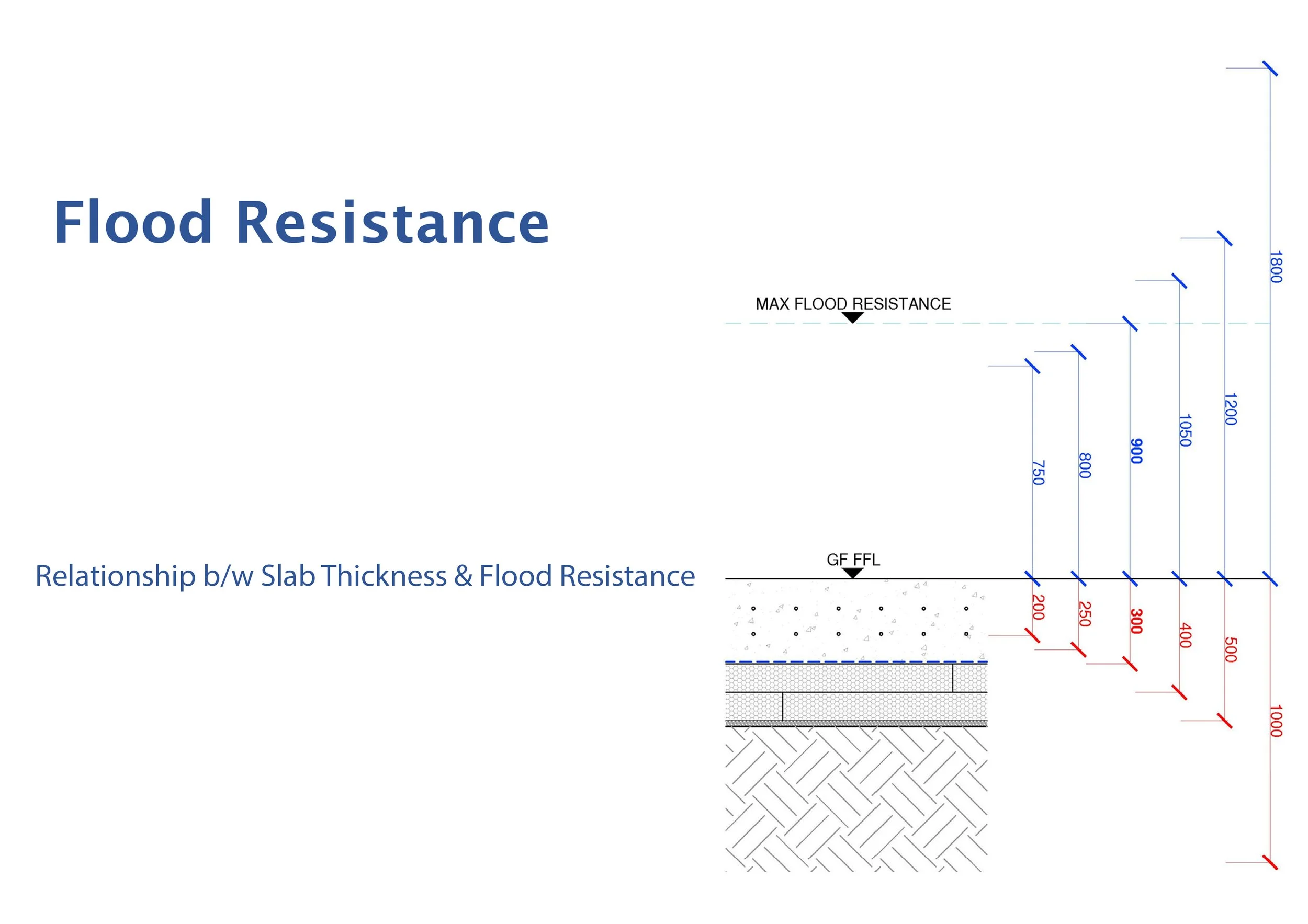
Our first approach, after we have exhausted external passive interventions such as landscape design and natural drainage, is to resist water ingress as far as practically possible, with a fabric-first approach which is then braced with the use of barriers and seals. Being mindful of the structural stress and potential failure of masonry walls from differential hydrostatic pressure across the building envelope, there comes a critical point in which we are forced to yield and permit the flood water to enter our buildings.
Flood Resilience
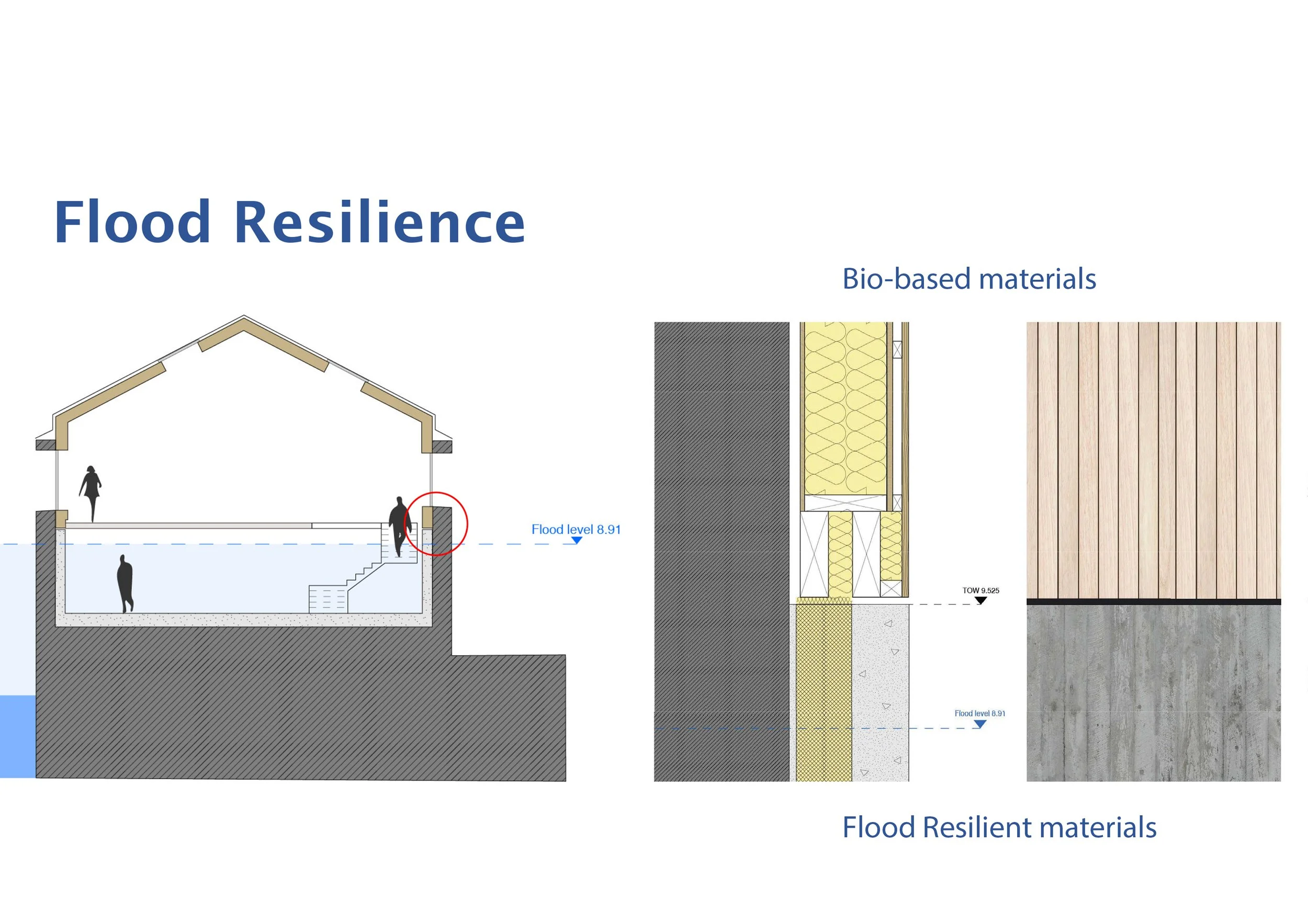
Given that water ingress is often unavoidable, our approach to resilience focuses on managing the presence of flood water within the building fabric. Our key considerations are to encourage rapid drainage once the external water level subsides, minimal damage to finishes and infrastructure and maintain vapour permeability where possible.
Flood Recoverability
Our approach to recoverability is the final testament to the success of a ‘flood ready’ strategy, focusing on getting the building and occupants back into operation as quickly as possible with minimum disruption and loss of building fabric and services. Floor and walls finishes are carefully specified to promote the cleaning of waterborne contaminants, closed-cell insulation (not the nasty petrochemical type) used to eliminate voids for bacterial growth, whilst high level services, out of flood’s reach remain in operation and sit amongst the appropriate use of hygroscopic, bio-based materials to counteract elevated humidity levels, passively working to regulate the spike in internal climatic conditions.
Material Compatibility and Embodied Carbon
Material specification has always been at the forefront of our design approach but their selection in a flood risk environment is now critical. Interventions must respect both material compatibility and whole-life carbon impacts. The introduction of high embodied carbon materials, particularly dense cementitious products and impermeable barriers, can play a role in resisting and controlling water damage but have to be first calculated, then carefully implemented to avoid hygrothermal disruption, trapping moisture and accelerating decay from salt migration and freeze-thaw cycling; as always, any implementation must follow best conservation practice and be reversible!
Annan Harbour Regeneration Project
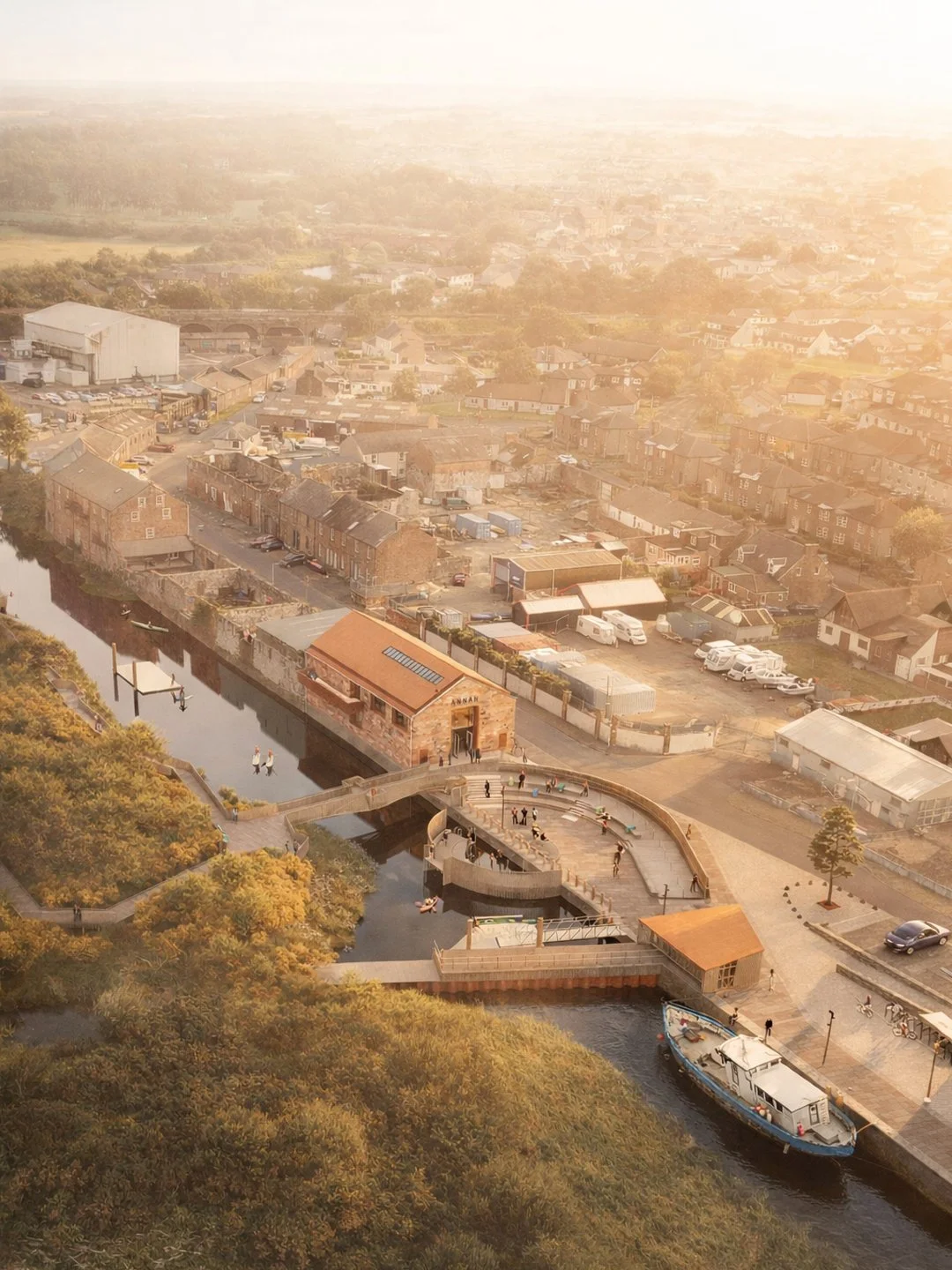
This month is an exciting time for the community of Annan as they see six years of talking and designing turning into two years of action from the recently appointed contractor, who has now taken site possession to transform the amazing historic and natural environment of Annan’s harbour into a thriving part of Annan’s future. One of Sotland’s seven ‘Climate Action Towns’, this adaptive re-use project will showcase exemplar strategies in landscape remediation, biodiversity net gain and flood readiness while bringing life, money, culture and learning back to a very special place where river meets sea at the frontline of climate change.
Spring Summary
As the last gasps of winter subside and we enter spring, global leaders appear to have the cooker dials cranked to the max as they compete to serve all-you-can-eat ‘rocket hot’ warfare, with global temperatures undoubtedly set to blister faster than ever from the carbon cost of invasion and military operations, rapidly amplified by the subsequent demolition and reconstruction of devastated communities.
The closure of the Strait of Hormuz should be a silver lining, the final catalyst to wean us of this global addiction to oil and transition to a net-zero economy, but this movement seems to be transitioning from a fallacy to dissolution as pressure is rising on the government to reverse the UK ban on opening new oil and gas fields to provide energy security at home. We need to accelerate the Just Transition!
The conservation of Scotland’s built heritage under changing climatic conditions requires a shift from purely defensive strategies towards adaptive, performance-based approaches. By applying the principles of resistance, resilience and recoverability, underpinned by appropriate material selection and an understanding of traditional construction behaviour, we can enhance flood readiness of our built environment and endeavour to safeguard communities and livelihoods.
The control of global emissions and combating climate change have long passed; the question is no longer how to keep water levels low or out, but how intelligently and equitably we can live with them.
Oliver Goddard is a RIAS Accredited Architect in Conservation and Sustainable Building Design championing flood resilient design at Arc Architects. Tom Morton, director of Arc Architects sits on the Scottish Government’s Flood Resilience Strategy Implementation Governance Group and is promoting a coordinated approach to flood risk management across Scotland.